How a birth chart works
The mechanics of astrology, in plain language — from the people who write the reports
1What astrology is
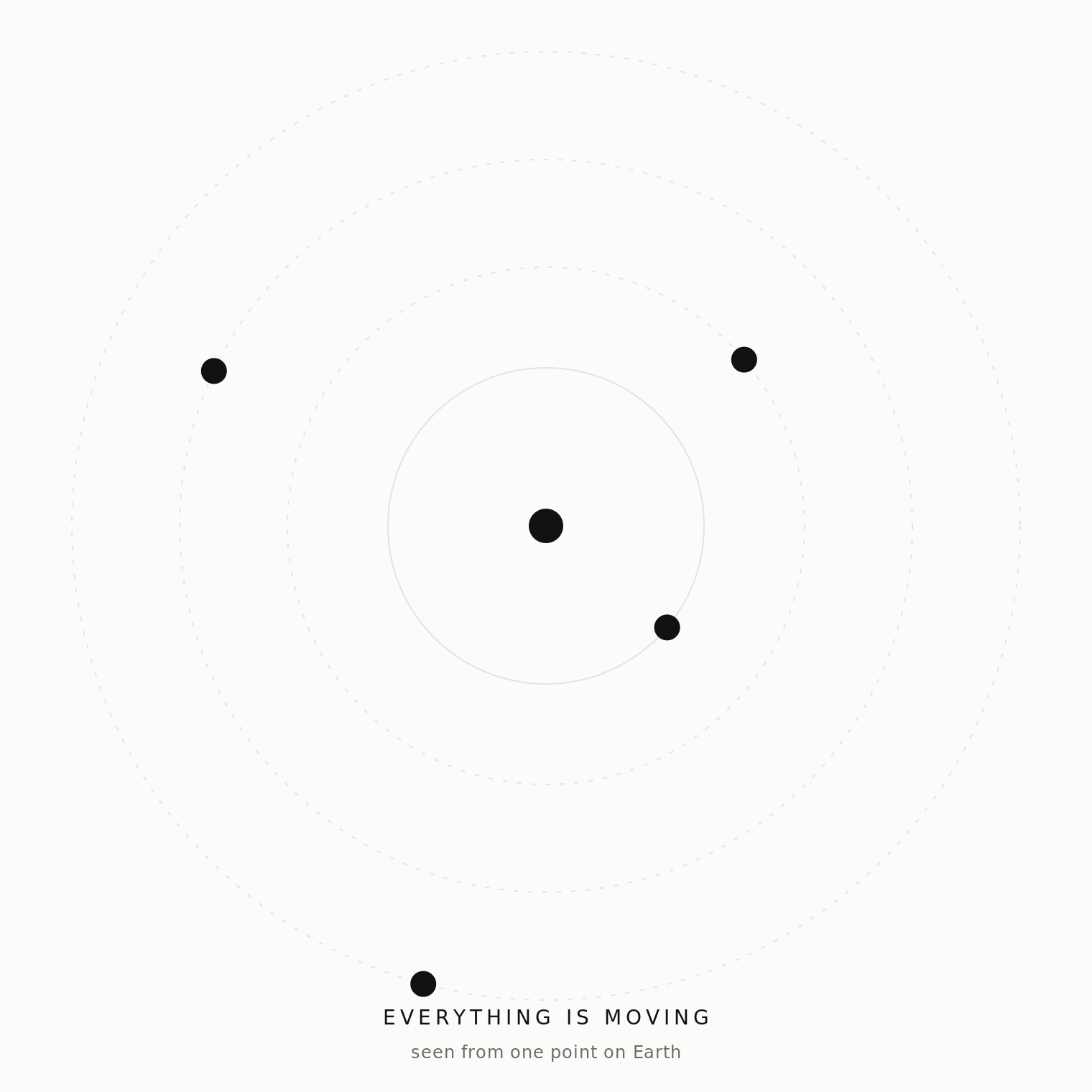
Everything in the solar system is moving. Astrology describes position within that motion — and nothing more than that.
›
A birth chart is a diagram of where the planets were, seen from one place on Earth, at one moment. That moment is your birth. That place is your birthplace.
Nothing mystical happens in the drawing itself. It is a coordinate system: the sky is divided into twelve sectors of thirty degrees, and the positions of the Sun, Moon and planets are plotted against them. The same calculation done twice gives the same answer.
What people disagree about is what those positions mean. That is interpretation — a tradition, not a measurement. We keep the two clearly separated.
2The birth chart
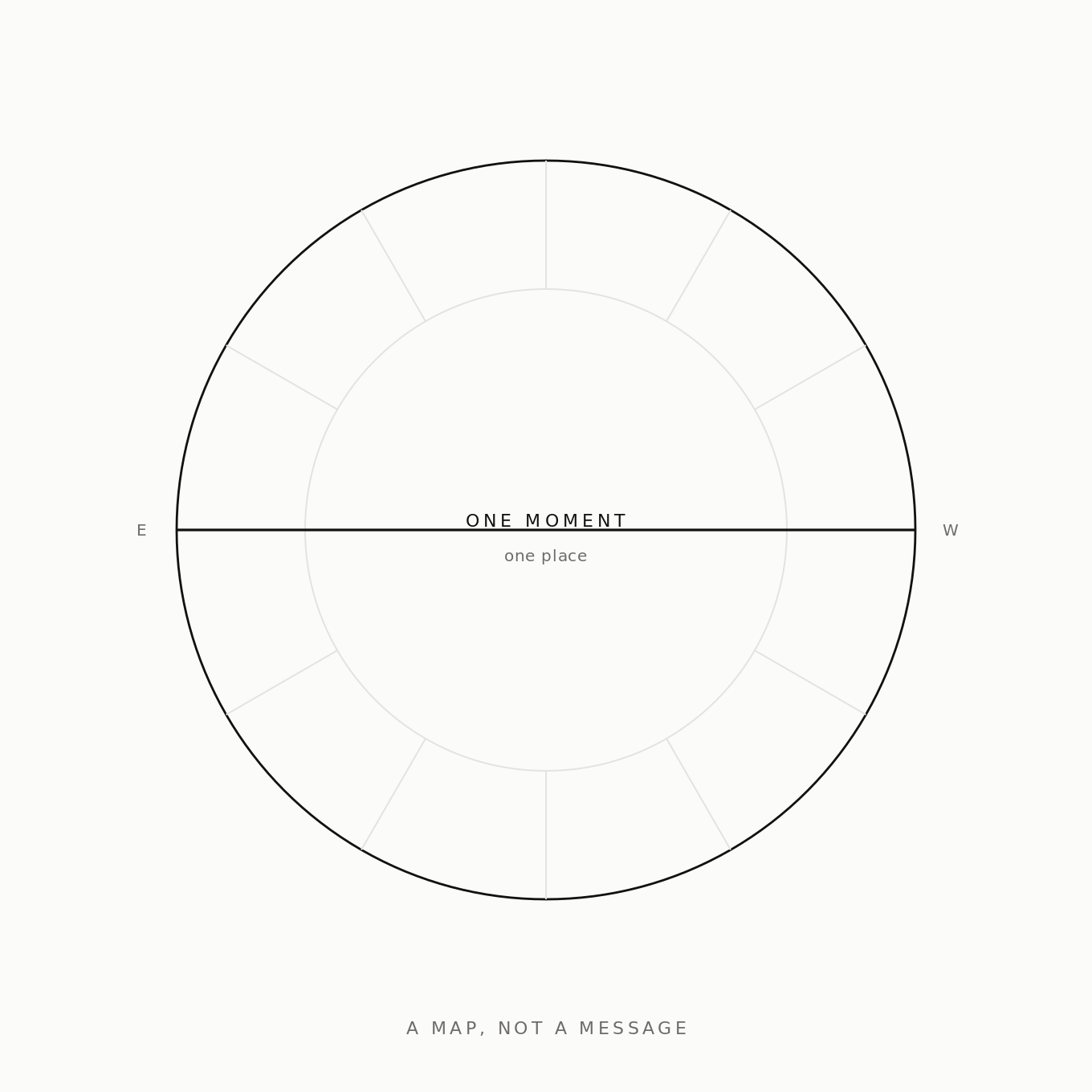
A map of one moment and one place. Not a message, and not a forecast.
›
The birth chart, or natal chart, fixes two things: when and where. Change either and the drawing changes.
The horizontal line across the middle is the horizon at your birthplace. Everything above it was in the sky; everything below it was under the Earth. That line is why place matters as much as time.
Every chart on this site is computed with Swiss Ephemeris, the same calculation library professional astrology software uses. Positions are accurate to fractions of a degree.
3Sun signs
The part you already know. It needs only a date, which is exactly why it says so little.
›
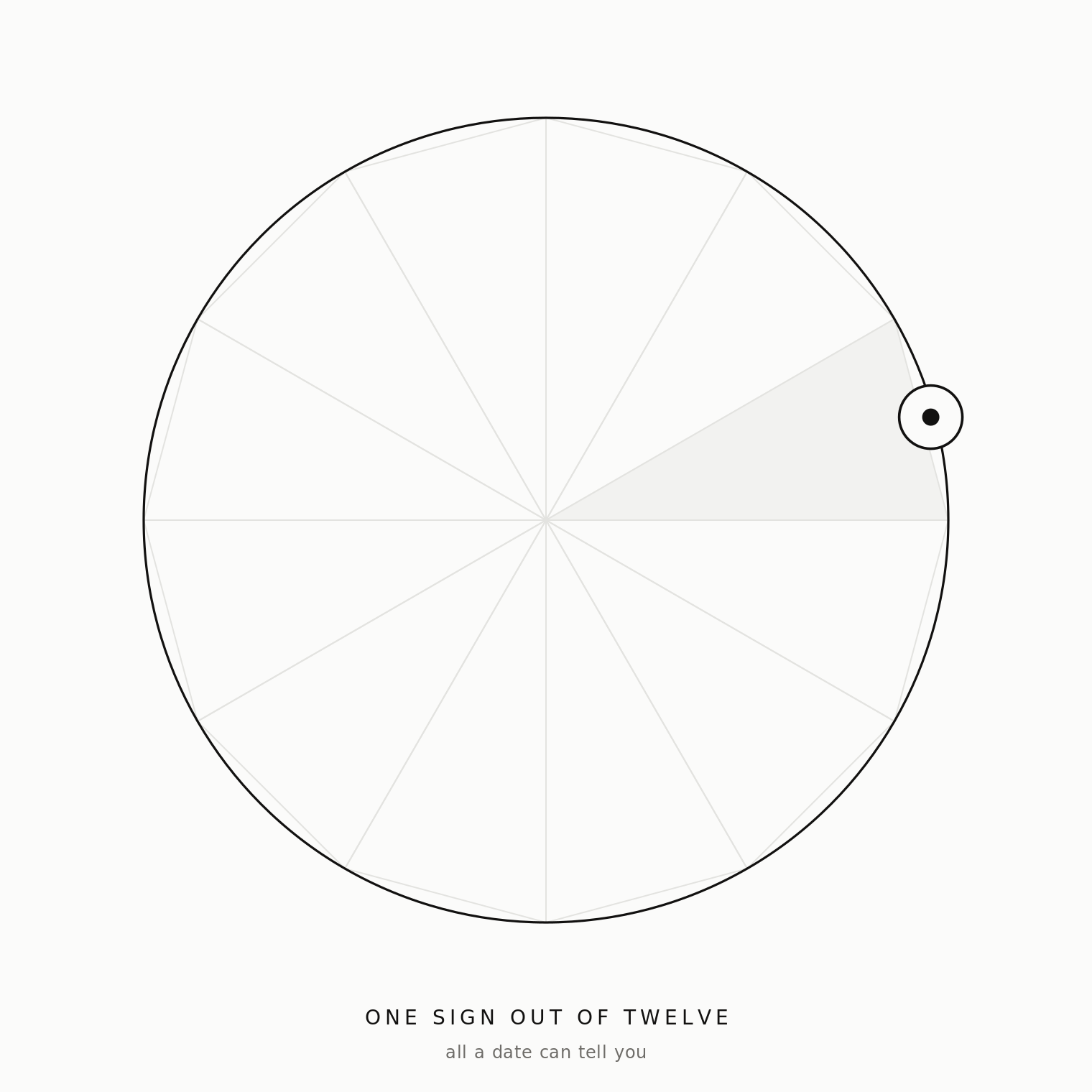
The Sun sign is the sign the Sun was in on the day you were born. It is what magazine horoscopes use, because a date is all it requires.
It is one body out of many, in one sector out of twelve. Useful as a starting point, and thin on its own.
The Moon sign is usually grouped with it. The Moon moves fast — it changes sign roughly every two and a half days — so near a boundary it needs the time as well.
4The rising sign
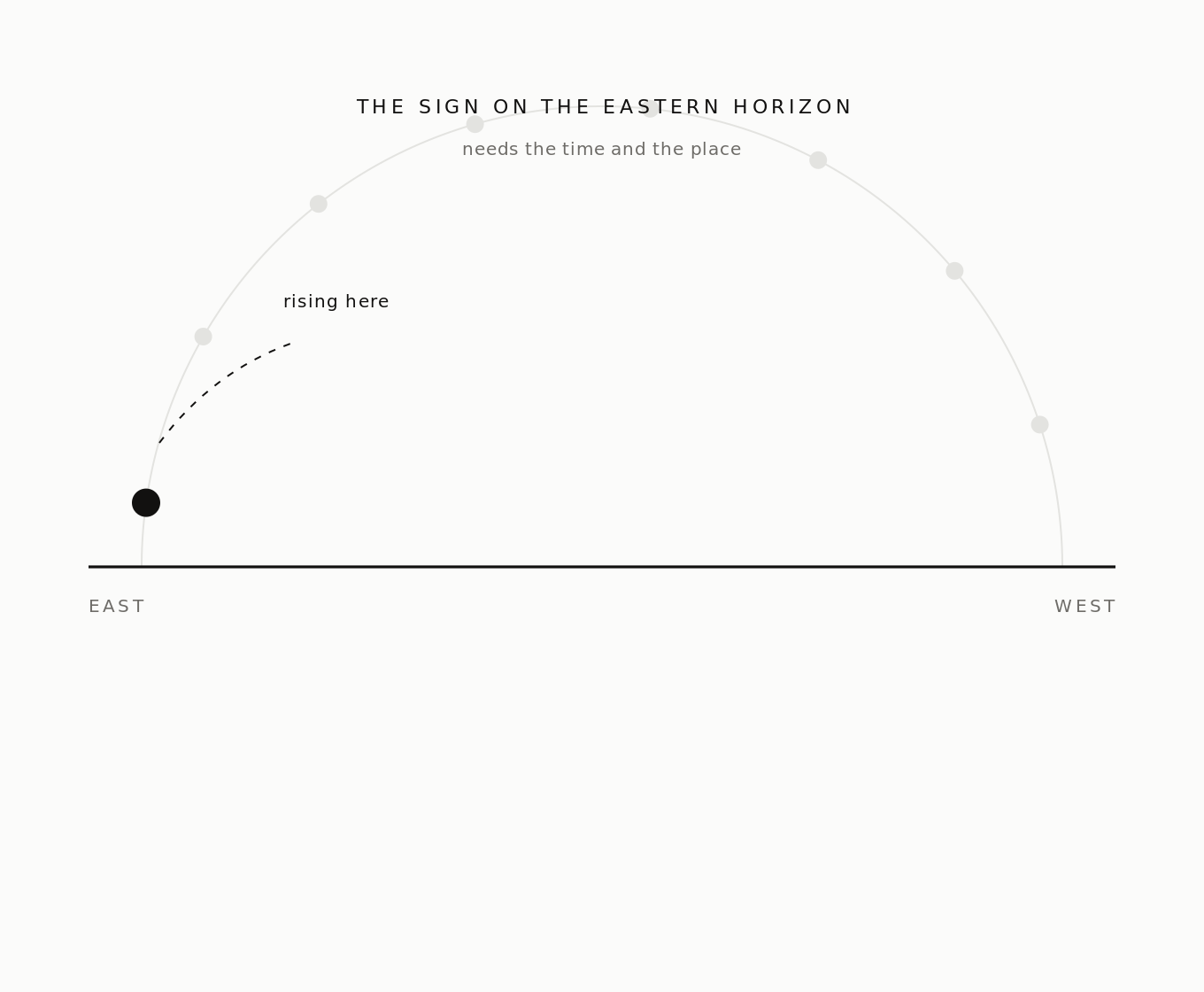
The sign coming up over the eastern horizon when you were born. The two-hour rule is an average, not a law.
›
Because the Earth turns, the horizon sweeps through all twelve signs in roughly twenty-four hours. Twelve signs across twenty-four hours averages two hours each — which is where the familiar rule comes from.
But the signs do not pass at equal speed. How long each takes depends on the latitude of the birthplace and the time of year. Near the equator the spread is modest; further north or south it becomes uneven — some signs can take well over three hours to rise while others take under one.
The practical consequence: if your recorded birth time is uncertain by an hour, the rising sign may or may not be affected, and it depends on where you were born.
5Houses
Where something plays out, rather than how. Twelve sectors, anchored to the horizon.
›
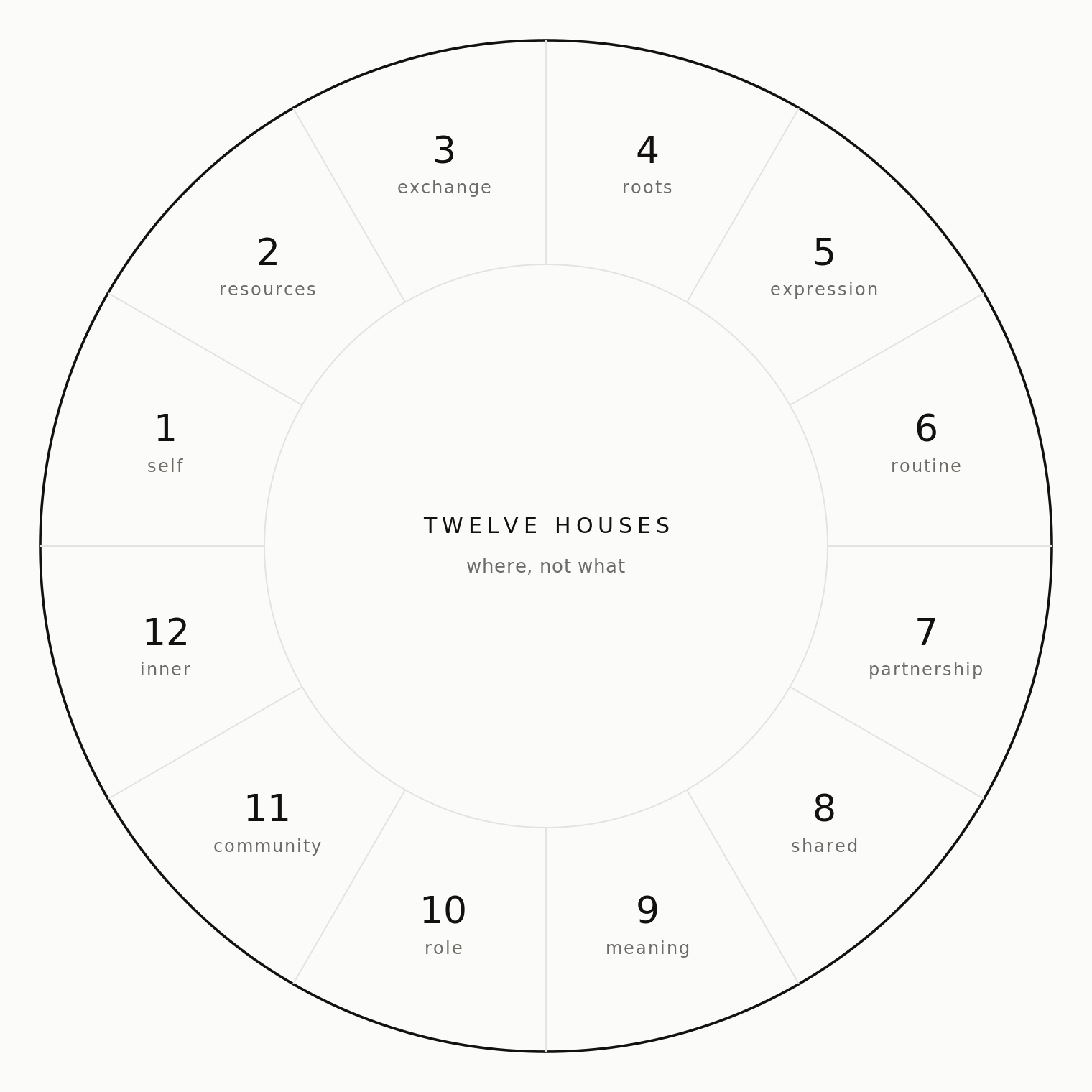
If signs describe how something is expressed, houses describe where — which area of life it plays out in. The first is traditionally associated with self, the seventh with partnership, the tenth with public role, and so on.
Houses are anchored to the horizon, which means they depend on the time and place of birth. Move the birth time and the boundaries rotate. Planets that sat comfortably inside one house can end up in the next.
This is the single biggest reason birth time matters. A chart without a time can still say where the planets were in the signs. It cannot reliably say which houses they fall in.
6House systems
There is more than one way to draw the boundaries. Two astrologers can disagree without either being wrong.
›
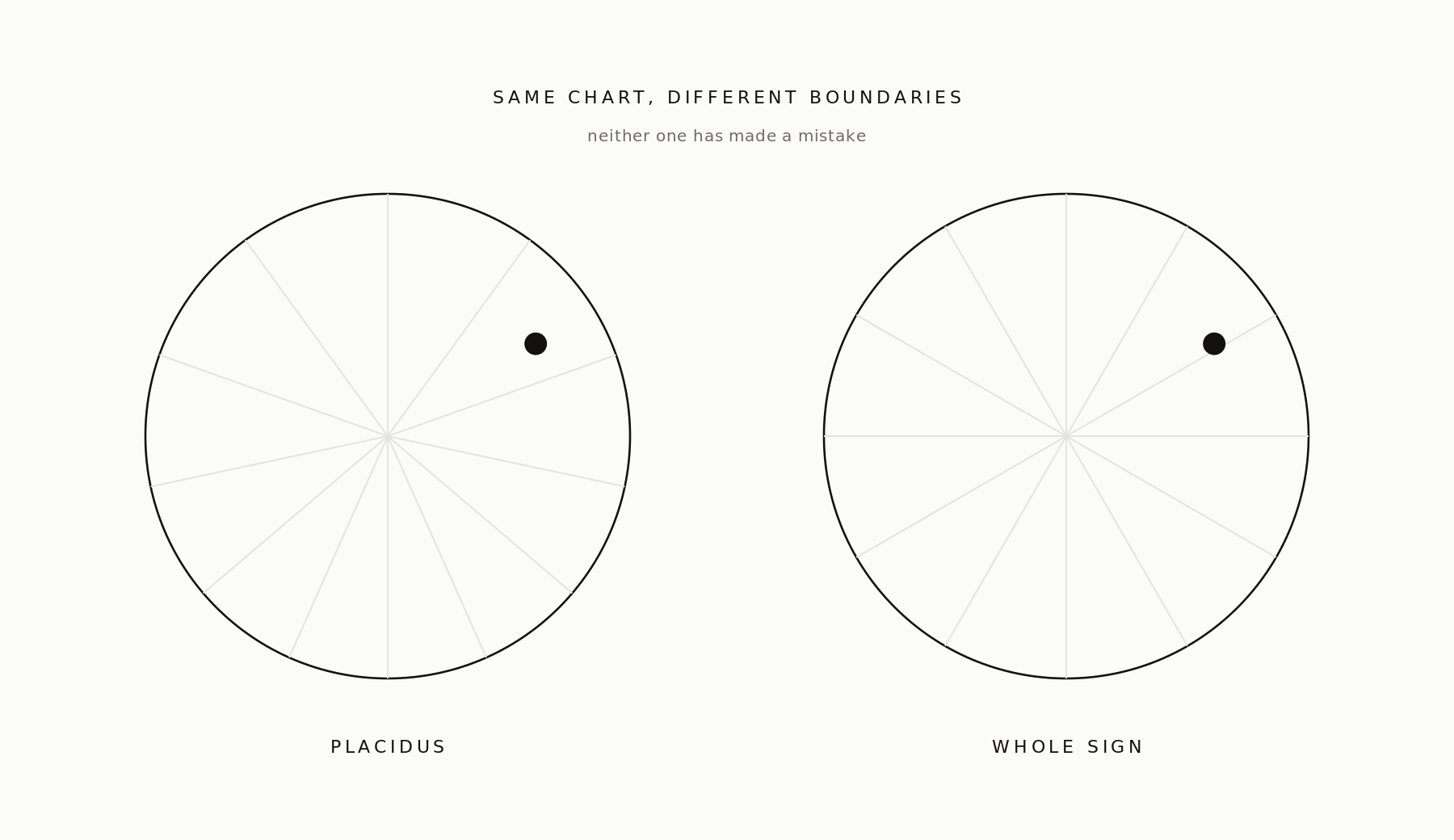
Placidus, Whole Sign, Koch, Porphyry, Equal — each divides the sky differently. The planets do not move; the lines between the houses do.
This is why two readings of the same birth data can put a planet in different houses. Neither has made an arithmetic mistake. They are using different conventions.
It is worth knowing simply so that a disagreement does not read as one of them being wrong. We use Placidus, the most widely used system in modern Western astrology.
7Aspects
Angles between two planets. Measured, not felt.
›
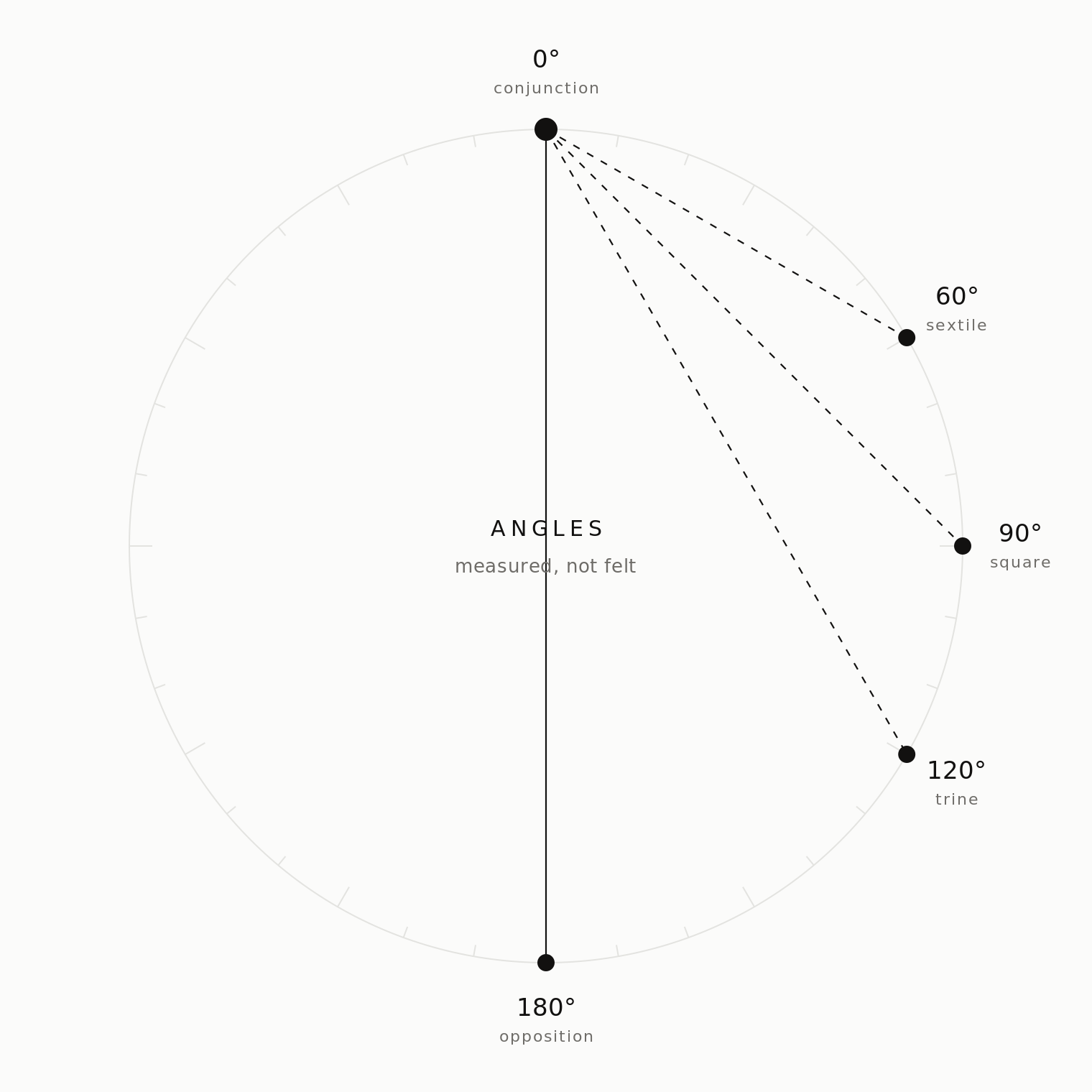
An aspect is an angle between two planets, measured along the circle of the chart. Certain angles are traditionally treated as significant: 0°, 60°, 90°, 120°, 180°.
Each has a traditional name — conjunction, sextile, square, trine, opposition — and a traditional reading. The angle itself is arithmetic; the reading is interpretation.
Aspects are the part of a chart most often described in dramatic terms. We describe them as relationships between two placements, and leave the drama out.
8Orbs
Angles are rarely exact, so each is given a tolerance. Different traditions allow different ones.
›
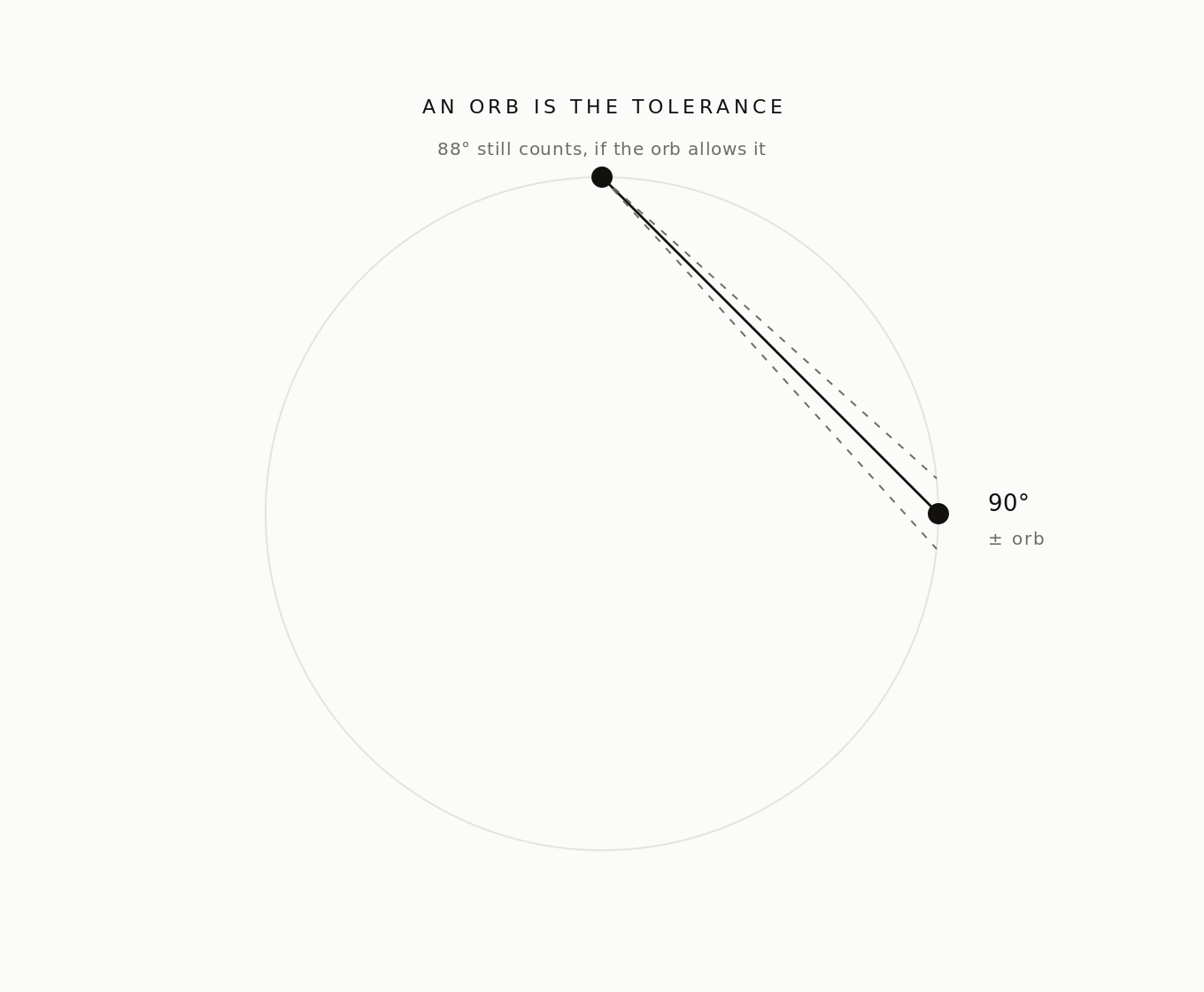
If two planets are 88° apart and the allowed orb is 6°, that still counts as a 90° aspect. The orb is the buffer zone around an exact angle.
Orbs are a convention, and they vary. A wider orb finds more aspects; a narrower one finds fewer and stronger ones. This is another place where two charts of the same person can legitimately differ.
Our reports state the orbs used, so the same chart can be checked against any other calculator.
9Why birth time keeps coming up
Three things depend on it directly. Everything else is stable across a whole day.
›
The rising sign, the house structure, and the exact position of the Moon all depend on the time. Which signs the slow-moving planets are in does not.
That is why a chart without a time is not useless. It is partial, and an honest reading says which parts are precise and which are not.
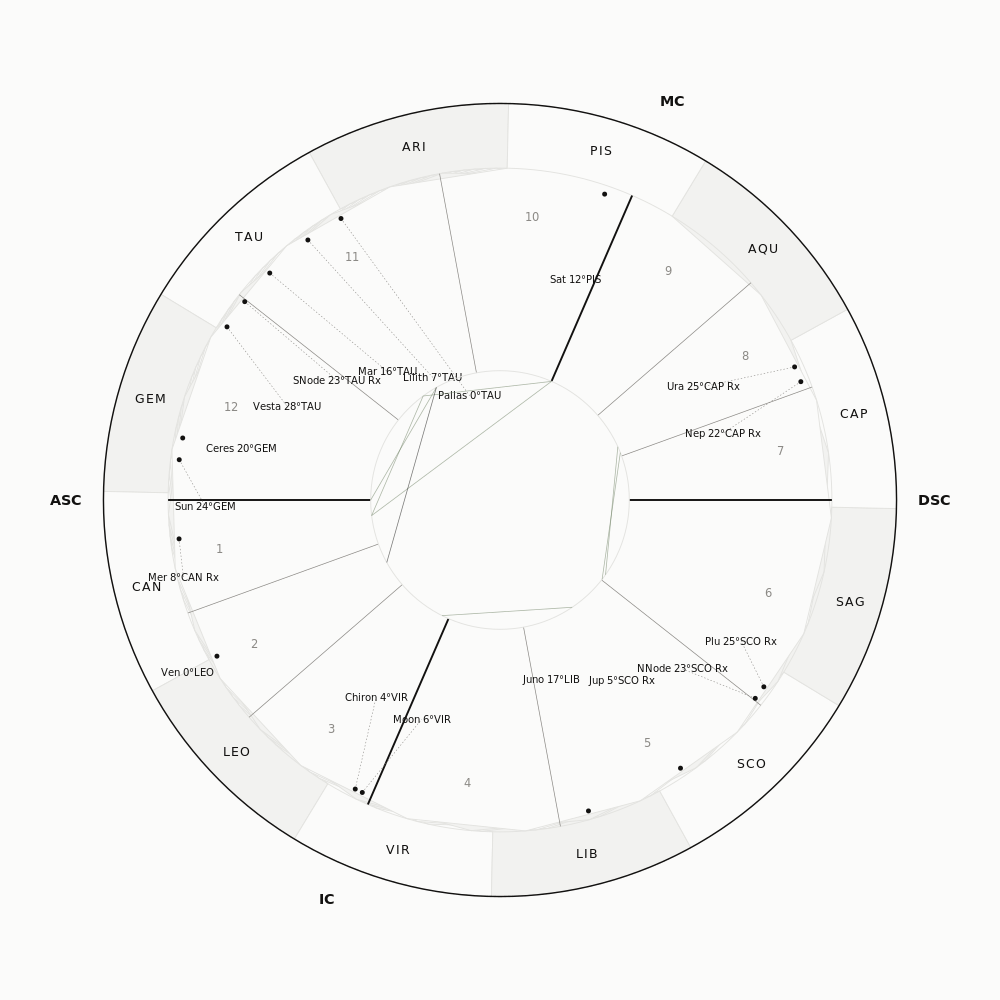
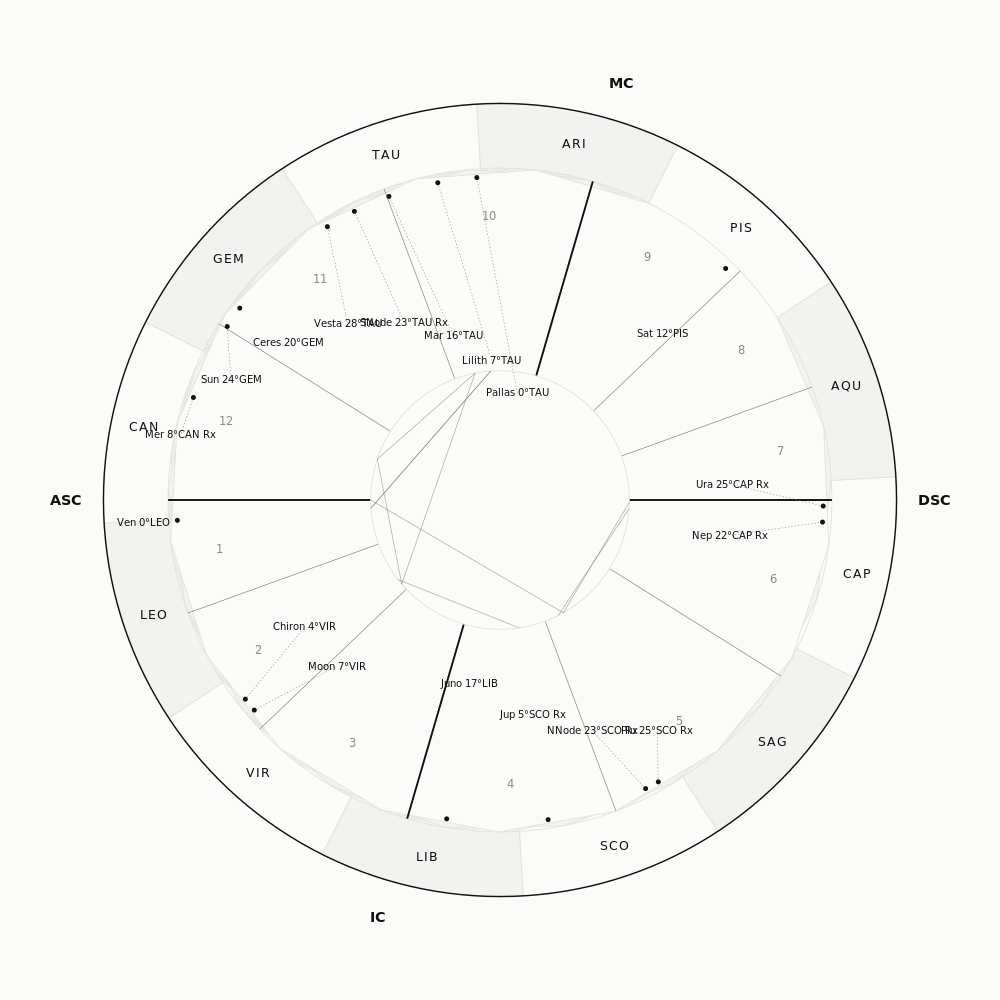
Below: the same birth date and city, two hours apart. The planets have barely moved — the Moon has travelled about one degree. The house structure underneath them has rotated, and in this calculated example all seven classical planets landed in a different house.
If you do not know your birth time, it is worth asking whether it was recorded at all. Practice varied by country and by decade, and in some places and periods the time of birth was simply not written on the certificate.
10What a chart does not do
It does not predict events, and it does not describe anyone but you.
›
A birth chart does not tell you what another person will do, whether someone will come back, or what will happen next month.
What it offers is a structured description — a set of positions, and a tradition of what those positions have been taken to mean. What you do with that description is yours.
We say this on every page and in every report, because it is the difference between a tool for thinking and a promise nobody can keep.
A free visual guide to your Sun, Moon and Rising, in plain language. Delivered by email, no account needed.